

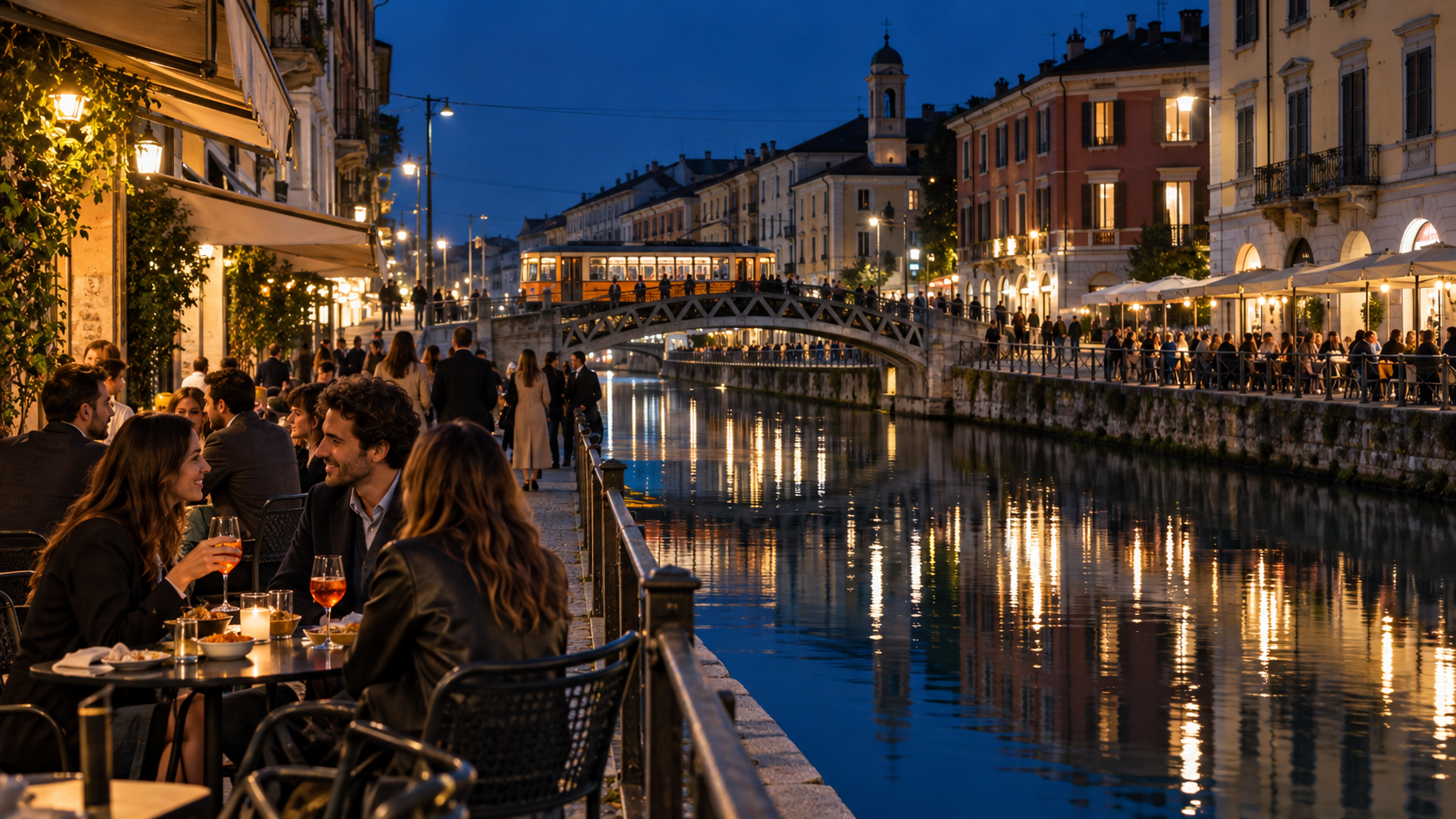
 Milan changes character after dark. The business suits loosen, café terraces fill, trams glow beneath historic buildings and the city moves naturally from aperitivo to dinner, cocktails, concerts and late-night dancing.
The old article focused primarily on a small selection of clubs. Today, the best way to experience Milan nightlife is to choose the right neighborhood for your interests. Navigli offers canals and lively crowds; Brera is refined and romantic; Porta Venezia is cosmopolitan and LGBTQ-friendly; Isola mixes local bars with live music; Corso Como attracts a fashionable crowd; and Porta Romana provides a more relaxed, contemporary evening.
This guide explains where to go, what to expect and how to enjoy Milano by night safely and confidently.
Milan Nightlife at a Glance
| Area | Best for | Typical atmosphere |
|---|---|---|
| Navigli and Darsena | First-time visitors, aperitivo, bar-hopping | Busy, youthful, informal |
| Brera | Couples, cocktails, elegant evenings | Refined and romantic |
| Porta Venezia | LGBTQ+ nightlife, international bars | Inclusive and cosmopolitan |
| Isola | Live music, independent venues, local character | Creative and contemporary |
| Corso Como and Porta Nuova | Fashionable bars and clubs | Stylish and energetic |
| Colonne di San Lorenzo | Young travelers and outdoor socializing | Casual and crowded |
| Porta Romana | Wine bars, restaurants and neighborhood nightlife | Sophisticated but relaxed |
| Duomo and central Milan | Rooftops, opera and special occasions | Scenic and upscale |
| NoLo | Alternative bars and emerging nightlife | Multicultural and experimental |
Begin with the Milanese Aperitivo
An evening in Milan usually begins long before anyone enters a nightclub. Between approximately 6:00 and 9:00 p.m., residents meet for an aperitivo: a drink accompanied by olives, chips, focaccia, cheese or other small dishes.
Aperitivo is sometimes compared with American happy hour, but the emphasis is different. It is less about discounted drinks and more about conversation and the transition between work and dinner.
Traditional orders include:
- Campari Soda
- Campari Spritz
- Aperol Spritz
- Negroni
- Negroni Sbagliato
- Americano
- Vermouth
- Prosecco
- Wine or beer
- Crodino or another alcohol-free bitter drink
Some establishments serve only a few snacks, while others offer more substantial platters. A generous formula that can replace dinner is often called an apericena. Before ordering, check whether the food is included in the price of the drink.
Discover the customs, drinks and etiquette behind this tradition in our complete Italian aperitivo guide.
Navigli and Darsena: Milan’s Most Famous Nightlife District
Navigli is the most recognizable nightlife area in Milan. Its atmosphere revolves around the Naviglio Grande, Naviglio Pavese and the nearby Darsena, the city’s historic dock.
Restaurants, cocktail bars, pubs and small clubs occupy former workshops and traditional buildings beside the water. In warmer months, crowds gather on the bridges, along the canals and around the Darsena.
Navigli is especially suitable for first-time visitors because dozens of venues are concentrated within walking distance. You can arrive for aperitivo, eat beside the canal and then continue to another bar without planning the entire night in advance.
The main streets can become extremely crowded on Friday and Saturday evenings. For a calmer experience, arrive before 7:00 p.m., explore the side streets or visit from Sunday through Thursday.
The Porta Genova M2 metro station is the most useful access point for much of the district. The official Milan tourism portal describes the Darsena waterfront as one of the city’s principal nightlife destinations. (yesmilano.it)
Brera: Cocktails, Romance and Old Milan
Brera offers a more polished interpretation of Milano by night. Its cobbled streets, elegant buildings, galleries and softly illuminated restaurants create one of the most attractive evening settings in the historic center.
The neighborhood is ideal for:
- A romantic dinner
- Wine and cocktails
- A pre-theater drink
- A quiet evening walk
- Visitors who prefer conversation to loud music
Popular gathering points include Via Brera, Via Fiori Chiari, Via Madonnina and the surrounding pedestrian streets. Prices generally reflect the prestigious location, but the district provides atmosphere that is difficult to reproduce elsewhere.
Brera is particularly enjoyable after visiting the Pinacoteca or walking through the nearby fashion district. The official city tourism site describes it as Milan’s artists’ quarter, popular with aperitivo drinkers, stylish visitors and couples. (yesmilano.it)
Porta Venezia: Inclusive and International
Porta Venezia is one of Milan’s most diverse neighborhoods. Elegant Liberty-style architecture stands beside international restaurants, independent businesses, cocktail bars and popular LGBTQ+ venues.
Via Lecco and the surrounding streets form the heart of Milan’s best-known LGBTQ+ nightlife area. During Pride and major cultural events, the neighborhood becomes particularly animated, although its welcoming atmosphere continues throughout the year.
Porta Venezia is a good choice for travelers looking for:
- Gay and LGBTQ+-friendly bars
- International food
- Informal aperitivo
- Cocktails and late-night socializing
- A mixed local and international crowd
The area is central and easily reached by the M1 metro. Corso Buenos Aires is nearby for shopping, while the gardens of Porta Venezia and the elegant side streets make the district interesting before the nightlife begins.
Isola: Live Music and Contemporary Milan
Once a working-class neighborhood separated from central Milan by railway tracks, Isola has developed into one of the city’s most fashionable districts without entirely losing its local identity.
The contrast is part of its appeal. Traditional apartment buildings and neighborhood bars sit near contemporary Porta Nuova, Piazza Gae Aulenti and the celebrated Bosco Verticale towers.
Isola is a strong choice for independent restaurants, craft beer, wine bars, cocktails and live music. It generally feels less tourist-oriented than Navigli, although it becomes lively on weekends.
Blue Note Milano
The best-known music venue in the district is Blue Note Milano, the Milanese branch of the international jazz-club family.
Located at Via Pietro Borsieri 37, it presents jazz, soul, funk and related musical styles in an intimate, seated setting. Guests can usually combine a concert with drinks or dinner. Because schedules and ticket prices depend on the performer, reservations should be made through the official website. (bluenotemilano.com)
Blue Note is especially suitable for couples, music lovers and mature travelers who want a memorable evening without the atmosphere of a traditional nightclub.
Corso Como and Porta Nuova: Fashionable Milan After Dark
Corso Como connects the traditional nightlife scene around Garibaldi with the modern towers and pedestrian spaces of Porta Nuova.
This part of the city appeals to visitors looking for fashionable cocktail bars, restaurants, lounge environments and clubs. During Milan Fashion Week and Design Week, the area attracts models, designers, media professionals and international visitors.
Piazza Gae Aulenti is particularly impressive after dark, when the surrounding towers and fountains are illuminated. It is an excellent place for an evening walk before drinks or dinner.
Although Milan’s reputation for strict dress codes is sometimes exaggerated, a polished appearance is useful here. Smart casual clothing is normally sufficient for bars and restaurants, while individual clubs may apply more selective entrance policies.
Colonne di San Lorenzo: Casual and Youthful
The columns in front of the Basilica of San Lorenzo form one of Milan’s traditional open-air meeting places. Students and younger residents gather around Piazza della Vetra and along Corso di Porta Ticinese before continuing to nearby bars.
This is a much more informal experience than Brera or Corso Como. People often buy an inexpensive drink and socialize outdoors, especially during warm weather.
It can become noisy and crowded, so the area will not appeal to everyone. Nevertheless, it provides an authentic glimpse of the social phenomenon Italians call the movida—the collective evening activity that develops around bars, streets and public spaces.
From here, visitors can walk toward the Darsena and Navigli, making the Colonne a convenient starting point for a longer night.
Porta Romana: Restaurants, Wine Bars and Local Life
Porta Romana has a sophisticated but less theatrical nightlife scene. Its restaurants, wine bars and cocktail venues draw residents, professionals and university students.
The neighborhood works well for travelers who want to enjoy a full dinner followed by drinks without entering Milan’s busiest tourist areas. The atmosphere is often lively but more manageable than Navigli on a Saturday night.
Farther south, Milan’s former industrial spaces host concerts, electronic-music events and larger productions.
Magazzini Generali
Magazzini Generali is one of Milan’s established music and nightlife venues. Located at Via Pietrasanta 16, it occupies a former warehouse associated with the Porta Romana railway district.
Its programming can include concerts, electronic music, DJ sets and special events. The character of the night depends heavily on the scheduled performer, so consult the calendar before going rather than treating it as a conventional club with the same music every evening.
Duomo, La Scala and Milan’s Rooftops
Nightlife in Milan does not have to mean crowded bars or dancing until sunrise.
For a more elegant evening, consider:
- An opera, ballet or concert at Teatro alla Scala
- A rooftop drink overlooking the Duomo
- Dinner near the Galleria Vittorio Emanuele II
- An evening walk from Piazza della Scala to Brera
- A classical-music performance or theatrical production
Piazza del Duomo is particularly striking after the daytime crowds diminish. Rooftop venues around the cathedral can be expensive, but one carefully chosen drink may be worthwhile for the view.
Reservations and neat clothing are advisable for high-end restaurants, rooftop bars and performances at La Scala.
NoLo: Milan’s Alternative Side
NoLo—short for “North of Loreto”—has emerged as one of Milan’s most interesting multicultural areas. Its nightlife is dispersed among neighborhood cafés, creative spaces, small music venues and independent bars rather than concentrated along one famous street.
NoLo suits visitors who have already experienced central Milan and want to see a more residential, experimental side of the city. Check individual event schedules because the neighborhood’s appeal often depends on concerts, exhibitions, community gatherings and temporary cultural programs.
Clubs and Late-Night Venues
Milan has numerous clubs, but their schedules, names, management and admission policies can change. Some operate only on selected nights or according to a seasonal calendar.
Before choosing a club:
- Consult the venue’s official website or social account.
- Confirm that an event is scheduled for that night.
- Check the musical style and expected audience.
- Look for advance-ticket or guest-list requirements.
- Verify the dress code.
- Check whether admission includes a drink.
- Plan the return journey before leaving your hotel.
Do not rely on an old list of “best clubs” without checking the current program. A celebrated venue may host techno one night, a private event the next and a live concert later in the week.
What Time Does Milan Nightlife Begin?
Milan’s evening develops in stages:
| Approximate time | Typical activity |
|---|---|
| 6:00–9:00 p.m. | Aperitivo |
| 8:00–10:30 p.m. | Dinner |
| 10:00 p.m.–midnight | Cocktail bars and live music |
| Midnight onward | Clubs and late-night venues |
These are guidelines rather than rules. Concerts and theater performances have fixed starting times, while clubs may not become busy until well after midnight.
During Milan Fashion Week, Design Week and major trade fairs, popular venues can fill much earlier than expected. Reservations become particularly important during these periods.
What to Wear in Milan at Night
Milan is stylish, but visitors do not need designer clothing to enjoy the city.
For most bars and restaurants, clean smart-casual clothing is appropriate. Dark jeans, a well-fitted shirt, a dress, an understated jacket or stylish sneakers are normally acceptable.
More exclusive clubs may refuse entry for:
- Beachwear
- Sports clothing
- Flip-flops
- Very casual shorts
- Large groups without reservations
- Guests who appear intoxicated
Dress codes vary by venue and event. Check directly before traveling across the city.
Staying Near Milan’s Nightlife
The best area depends on the evening experience you want.
- Choose Navigli for canals, aperitivo and bar-hopping.
- Choose Brera for romance, restaurants and central sightseeing.
- Choose Porta Venezia for inclusive nightlife and excellent transport.
- Choose Isola or Porta Nuova for contemporary Milan and live music.
- Choose Porta Romana for restaurants and a more local atmosphere.
- Choose Duomo for convenience, rooftops and cultural evenings.
Compare current availability and rates on Trip.com’s Milan hotel page. Choosing accommodation near the evening district you expect to visit most can reduce late-night travel and taxi expenses.
Affiliate disclosure: Italia Mia may earn a commission from qualifying reservations made through this link, at no additional cost to the traveler.
Getting Around Milan at Night
The metro is convenient during the day and evening, but it does not operate continuously throughout the night. When metro trains stop, ATM runs replacement and dedicated night bus services identified by the letter N. Normal ATM tickets and passes can be used on the night network. (atm.it)
Useful precautions include:
- Download the official ATM Milano app.
- Check the last metro before beginning the evening.
- Save your accommodation address on your phone.
- Use official white taxis from marked ranks or recognized booking services.
- Allow additional travel time on Friday and Saturday nights.
- Never accept a ride from an unlicensed driver.
Consult the official ATM night-service information before going out, as routes and schedules may change.
Safety and Local Etiquette
Milan is generally manageable for visitors who use the same precautions they would take in another major European city.
Keep phones and wallets secure in busy areas, particularly around Navigli, the Duomo, crowded trams, metro stations and late-night food outlets. Avoid leaving drinks unattended, and do not carry more cash than necessary.
When drinking outdoors, remember that nightlife districts are also residential neighborhoods. Milan periodically introduces rules governing takeaway alcohol, outdoor seating and activity in heavily frequented nightlife zones. In 2026, the city issued measures affecting multiple nightlife areas, so visitors should follow posted signs and current instructions from businesses. (comune.milano.it)
Avoid shouting beneath residential windows, leaving bottles in public spaces or sitting on private entrances. The best Milan nightlife experience combines enjoyment with respect for the people who live there.
A Perfect First Evening in Milan
For a first visit, this itinerary provides a balanced introduction:
- Begin with an early-evening walk around Piazza del Duomo.
- Continue through the Galleria and toward Brera.
- Have an aperitivo in Brera or near Porta Garibaldi.
- Eat dinner in Isola.
- Attend a jazz performance at Blue Note or have a cocktail in Porta Nuova.
- Return by metro if service is still operating, or use an official taxi or night bus.
For a more informal evening, replace Brera and Isola with the Colonne di San Lorenzo, Darsena and Navigli.
During the day, complement your evening exploration with Italia Mia’s guide to seeing magnificent Milan on foot.
Recommended Books About Milan
Milan Travel Guides on Amazon — Compare practical guidebooks containing neighborhood maps, restaurant suggestions and public-transport advice.
Lonely Planet Milan and the Lakes — Useful for combining Milan with Lake Como, Lake Maggiore and other Lombardy destinations.
DK Eyewitness Milan and the Lakes — A visually oriented guide featuring maps, illustrations and suggested itineraries.
As an Amazon Associate, Italia Mia earns from qualifying purchases.
Related Italia Mia Guides
- Italian Aperitivo: Drinks, Food, Etiquette and City Guide
- The Italian Passeggiata: The Art of the Evening Stroll
- Shopping in Milano: The City’s Best Shops and Boutiques
- See Magnificent Milan on Foot
- Images of Milan
- Region of Lombardia
- Italy for First-Time Visitors
External Links
- YesMilano: Milan Nightlife Districts
- YesMilano: Aperitivo in Milan
- ATM Milano: Night Service
- Blue Note Milano
- Teatro alla Scala
- Municipality of Milan